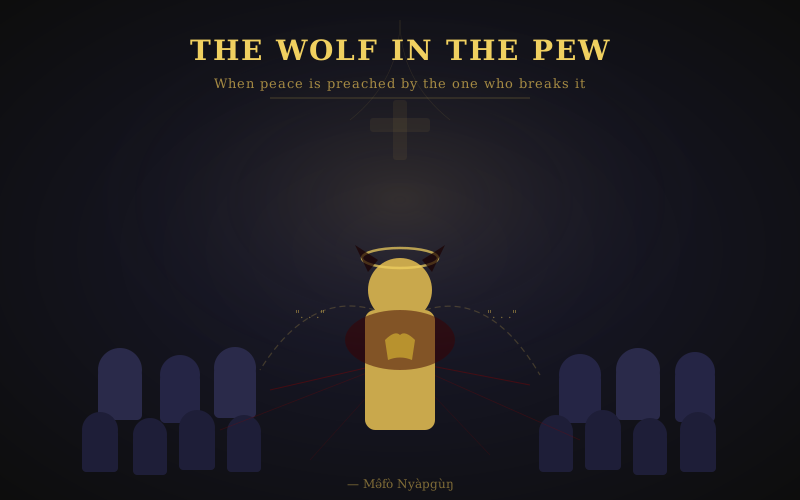
By Mə̂fò Nyàpgùŋ
Every community has known one. A church. A workplace. A family. A neighbourhood association. Everything is calm — until a particular person arrives. Slowly, almost imperceptibly, the atmosphere shifts. Friendships fracture. Alliances form and dissolve. Whispers multiply. And somehow, at the centre of it all, stands someone who appears to be the most peaceful, the most spiritual, the most concerned — praying for unity while quietly being the architect of division.
This is not fiction. It is a pattern, and it is worth naming.
The Arrival
The covert divider rarely announces themselves with hostility. On the contrary, they enter with warmth, generosity, and often, a conspicuous display of faith. They quote scripture. They offer to pray. They express deep concern for the group’s well-being. They seem, in every visible way, to be exactly what every community needs.
This is precisely what makes them so dangerous.
Their strategy — whether conscious or not — begins with listening. They are exceptional listeners. Within weeks of joining a group, they know everyone’s frustrations, insecurities, old wounds, and unresolved tensions. They collect this information not to heal it, but to use it.
The Method: Speaking Without Being Heard
The covert divider has mastered a particular art: they share what you said without ever revealing what they said.
The conversation typically unfolds like this: they sit with Person A and skillfully draw out their grievances about Person B. They nod. They sympathize. They may even add a small detail that inflames the wound — « I probably shouldn’t say this, but I’ve heard others feel the same way. » Then they walk to Person B and report, selectively, what Person A said — omitting their own role entirely in provoking the conversation.
They are never the source. They are always the messenger. And the message always arrives just distorted enough to wound.
This technique is devastatingly effective because it is nearly impossible to trace. When the conflict erupts, both parties are angry at each other, not at the person who lit the match and quietly stepped back.
The Shield of Spirituality
What distinguishes this particular type from a common gossip or troublemaker is their deliberate use of religious or moral language as cover.
They do not merely talk about God — they weaponize God’s name as a shield of credibility. They organize prayer meetings for peace during the very conflicts they have sown. They speak of love, forgiveness, and unity with sincere-sounding voices. They position themselves as the group’s moral anchor, the one who « just wants everyone to get along. »
This spiritual veneer serves two purposes. First, it makes them above suspicion — who would accuse someone organizing prayer sessions of being the source of the problem? Second, it gives them access. People open up to the devout. People confide in the compassionate. And everything confided becomes potential ammunition.
The Tears
When — on rare occasions — someone begins to suspect and gathers the courage to confront them, the covert divider deploys their final weapon: tears.
The crying is immediate, disarming, and convincing. They express deep hurt at being misunderstood. They invoke their faith, their intentions, their sacrifices for the group. They may ask, with genuine-seeming anguish, « How could you think this of me? » The accuser, suddenly faced with a weeping, wounded soul, begins to doubt themselves. Others rally to comfort the accused. The confrontation collapses. The divider walks away not only cleared, but with deeper sympathy than before.
This is not always a calculated performance. Some covert dividers have convinced themselves, at some deep level, that they are truly innocent — that they were only « sharing concerns, » only « trying to help. » The self-deception is part of the armour.
The Damage
Communities torn apart by a covert divider rarely understand what happened to them. They see the broken friendships, the factions, the bitterness — but they attribute it to each other. The real cause remains hidden, often permanently.
By the time truth surfaces — if it ever does — the damage is usually irreversible. Reputations have been destroyed. Trust has been shattered. Good people have left. And the divider may have already moved on to the next group, carrying the same quiet storm within them.
How to Protect Your Community
Awareness is the first defence. A few principles worth holding:
Observe patterns, not personalities. Ask yourself: did the discord begin or intensify after a particular person arrived? Who seems to always be present when information travels? Who always knows everything, but claims to have said nothing?
Verify before you react. When someone brings you a report of what another person said, ask directly: « Did you speak with them yourself? May I? » The covert divider depends on your not verifying. Short-circuit the chain.
Be cautious of those who pray loudest for the peace they are quietly preventing. Genuine peacemakers build bridges through transparency. They say the same things in private that they say in public.
Notice what happens when they are held accountable. Honest people, when confronted, may be hurt or defensive — but they engage. They ask questions. They try to understand. The covert divider deflects, cries, or makes themselves the victim.
Protect your own words. Be measured in what you share with people you do not yet know deeply, regardless of how warm or spiritually compelling they appear. Trust is built over time and through consistency — not through early intimacy.
A Final Word
It would be too simple to call these individuals evil. The reality is more complex and, in some ways, more tragic. Many covert dividers are themselves deeply wounded people — individuals who learned early that direct power was unavailable to them, and so mastered the art of indirect influence. Their behaviour is rooted in insecurity, not strength.
That understanding, however, does not make the damage they cause any less real.
A community that cannot name what is happening to it cannot protect itself. This article is an invitation to look clearly, speak carefully, and build the kind of relationships where truth can survive — where clarity is valued over comfort, and where those who truly build peace are recognized not by their words, but by the unity that follows in their wake.
Mə̂fò Nyàpgùŋ