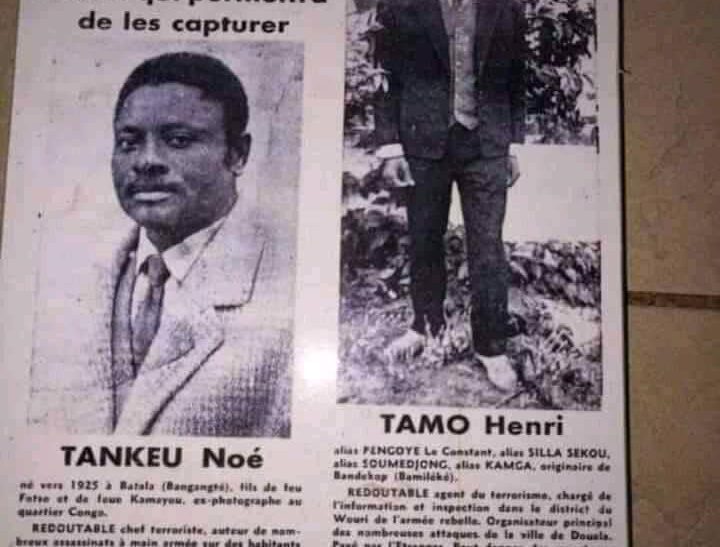
Origins and Identity
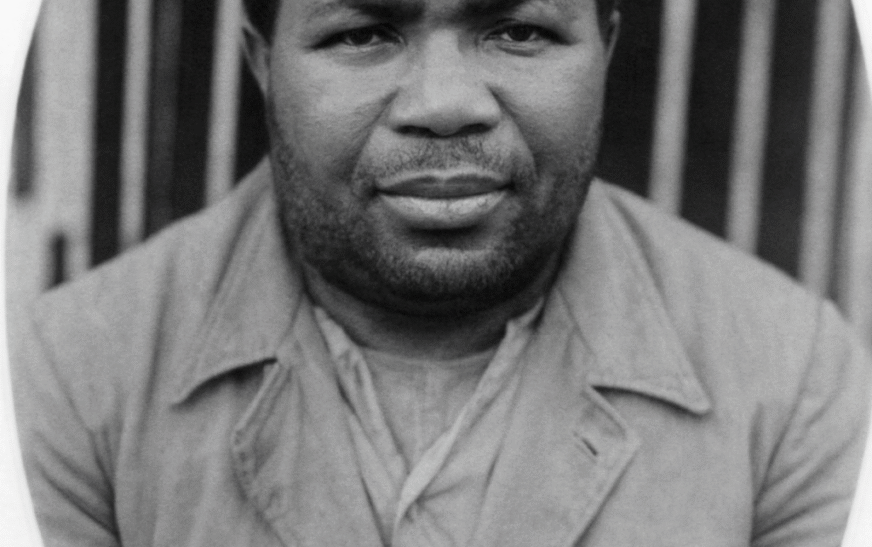
Tankeu Noé, who died on January 3, 1964, was a son of the Bamiléké community—a people deeply marked by colonial repression and the violence of the early post-independence years. Like many of his generation, he was radicalized by the injustice of French colonial rule and later by what he and his comrades considered the betrayal of independence by Ahmadou Ahidjo’s government. He rose to become a commander in the Union des Populations du Cameroun (UPC) armed wing, the Armée de libération nationale kamerunaise (ALNK), active in the Littoral Province around Douala.
Guerrilla Resistance
The ALNK was poorly armed and loosely organized, but relied on its knowledge of the terrain and mobile guerrilla tactics. At first, their enemy was the French colonial army. After 1960 independence, the fight turned against Ahidjo’s new government—seen as a puppet regime installed with French support.
Tankeu Noé became known for bold and risky operations:
- On 27–28 June 1959, his fighters attacked the Mboppi military camp in Douala, seizing 19 guns. This daring raid prompted a massive French crackdown, leading to the arrest of about 100 suspects after UPC documents were captured. Reinforcements were sent in: five companies of troops and five squads of gendarmes.
- On 24 April 1960, as part of counter-insurgency, forces burned the Congo quarter of Douala, which was Tankeu’s base. Official figures reported 19 deaths and 5,000 displaced, though survivors recall much higher tolls.
Capture and Trial
By 1963, the rebellion was severely weakened. The Cameroonian army, working closely with French advisors like General Max Briand, pursued commanders with ruthless efficiency.
- On 9 September 1963, Tankeu Noé was captured and convicted under charges of “terrorism.”
- Initially sentenced to hard labor, he was retried under the new law of 30 October 1963, which gave the regime sweeping powers.
- Brought before a military tribunal, he and fellow fighter Makanda Pouth were condemned to death.
Execution
On 3 January 1964, Tankeu Noé was publicly executed in Douala’s Congo quarter, the very neighborhood where his struggle had begun. He was tied to an electric pole and shot by firing squad, a symbolic display meant to crush resistance and intimidate the local population. His execution, like that of Ernest Ouandié seven years later (1971), was a defining act of state terror. It silenced voices but also etched their names into the long history of Bamiléké resistance.
Historical Context
The story of Tankeu Noé cannot be separated from the wider repression of the UPC movement (1955–1971), one of the most brutal counter-insurgencies in Africa:
- French colonial forces deployed bombing campaigns, village burnings, and collective punishment.
- Ahidjo’s government, once independent, continued this strategy with French backing.
- The Bamiléké highlands and urban strongholds like Douala became laboratories of surveillance, displacement, and violence.
Noé’s Congo quarter base and his execution there illustrate the urban face of the conflict, often overshadowed by the better-known guerrilla campaigns in the mountains.
Legacy and Memory
Despite his sacrifice, Tankeu Noé remains a little-known figure, overshadowed by leaders like Um Nyobè, Moumié, and Ouandié. Yet his story matters because it represents:
- The continuity of resistance from the colonial to the post-colonial era.
- The price paid by local communities that sheltered fighters and bore collective punishment.
- The way Bamiléké names were systematically associated with rebellion and punished disproportionately.
Today, remembering Tankeu Noé is part of a broader struggle to confront Bamiphobia and to restore dignity to those branded as “troublemakers” or “terrorists” simply for demanding justice.
Myth vs. Reality: Tankeu Noé
| Myth (State Narrative) | Reality (Historical Record & Memory) |
|---|---|
| “Tankeu Noé was a terrorist.” In government communiqués and official press, Noé and his comrades were labeled terroristes, accused of sowing chaos and undermining “peace” in newly independent Cameroon. | He was a resistance fighter. Noé was a commander of the UPC’s Armée de libération nationale kamerunaise (ALNK), part of a wider liberation movement. His actions, including the 1959 raid on Mboppi camp, were aimed at securing arms against colonial domination and authoritarian rule. |
| “He threatened national unity.” State rhetoric often framed UPC fighters, especially Bamiléké, as tribal separatists whose ambitions endangered the fabric of the young nation. | He fought for genuine independence. Noé and the UPC opposed what they saw as a false independence under Ahmadou Ahidjo, heavily backed by France. Their struggle was national, not tribal, seeking freedom from neocolonial control. |
| “He brought destruction to his community.” Authorities justified crackdowns by blaming insurgents for civilian suffering, including the burning of Congo quarter in 1960. | Communities paid the price of repression. Archival evidence shows the military deliberately used collective punishment to break resistance. Thousands were displaced, homes torched, and survivors terrorized. Responsibility lay with state forces, not the insurgents. |
| “His trial was lawful and just.” Officials claimed due process was followed, presenting his conviction as proof of legitimate state authority. | He was silenced through legal manipulation. Noé was first sentenced to hard labor, then retried under the October 1963 emergency law. This law expanded executive powers, enabling a military tribunal to condemn him to death without new evidence. |
| “His execution restored order.” The public shooting on 3 January 1964 was staged as a demonstration of state strength, meant to deter rebellion. | It was state terror. Executing Noé in his own neighborhood, tied to a power pole, was designed to humiliate and traumatize the Bamiléké population. It reinforced fear, but also left a legacy of resistance and martyrdom. |
Why this framing matters
- The “terrorist” label delegitimized UPC fighters while concealing the political nature of their struggle.
- By framing resistance as “tribal,” the regime weaponized Bamiphobia, feeding stereotypes that persist today.
- Public executions like Noé’s exemplify how state violence was normalized in the name of stability.