The passing of Jesse Jackson marks the end of an era—but not the end of a movement. For more than six decades, Reverend Jackson stood at the intersection of faith, justice, and political courage. He was not simply a civil rights leader; he was a moral voice that refused to be quiet in the face of injustice. His life was a testament to the belief that democracy must stretch wide enough to include those it historically excluded. Today, we do not only mourn a man. We honor a mission.
A Young Disciple of a Dream
Reverend Jackson rose to national prominence as a protégé of Martin Luther King Jr. during the Civil Rights Movement of the 1960s. He was present in Memphis in 1968 during Dr. King’s final campaign in support of striking sanitation workers—a campaign rooted in economic justice, not only racial equality. From Dr. King, Jackson inherited a conviction: civil rights without economic power are incomplete—voting rights matter. Dignity matters. But jobs, wages, and opportunity matter too. After Dr. King’s assassination, Jackson did not retreat. He organized.
Operation Breadbasket and Economic Justice
As head of Operation Breadbasket—an initiative under King’s Southern Christian Leadership Conference—Jackson pushed corporations to hire Black workers, invest in Black communities, and open doors that had long been closed. This was civil rights translated into contracts, payrolls, and economic leverage. Later, he founded Rainbow PUSH Coalition, an organization dedicated to expanding economic and educational opportunities for marginalized communities. The name itself—Rainbow—symbolized inclusion across race, class, gender, and geography. Jackson understood something profound: justice must be intersectional long before the word became popular.
A Presidential Campaign That Shifted the Nation
In 1984 and again in 1988, Reverend Jackson ran for President of the United States. At the time, the idea seemed improbable to many. Yet his campaigns were transformative. He built what he called a “Rainbow Coalition”—a political alliance of Black Americans, Latinos, working-class whites, farmers, labor unions, students, and the poor. In 1988, he won several primaries and caucuses, becoming one of the most successful Black presidential candidates in U.S. history. His campaigns expanded voter registration, increased political participation among marginalized groups, and helped reshape the Democratic Party’s coalition for decades to come. He dared to believe the presidency was not beyond reach. And in daring, he widened the path.
A Global Advocate for Human Dignity
Reverend Jackson’s activism was not confined to American borders. He negotiated for the release of hostages abroad, advocated against apartheid in South Africa, and spoke out against global inequality.
He believed the struggles for justice in Chicago, Mississippi, Johannesburg, and Palestine were interconnected. Human dignity was neither negotiable nor national.
Beyond Politics: The Power of Presence
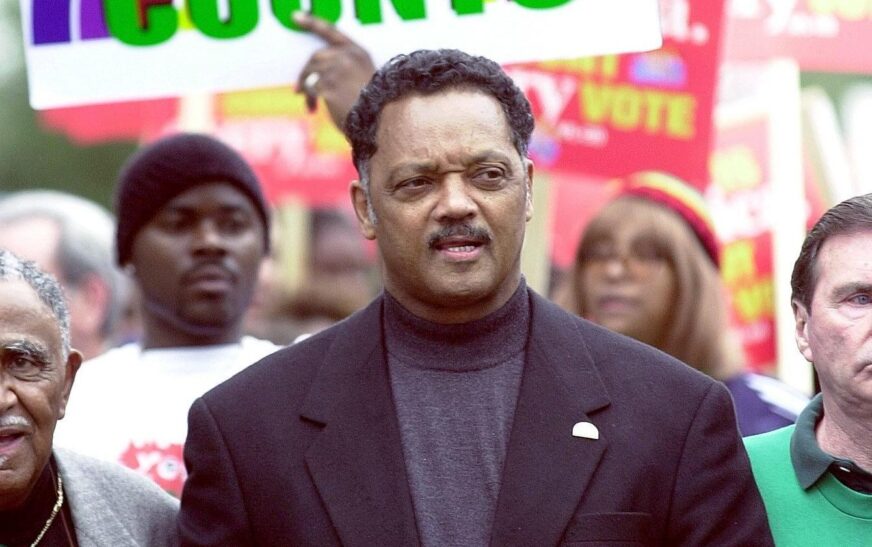
Jackson’s voice—rhythmic, prophetic, unafraid—echoed in churches, convention halls, and street marches. He was a bridge between generations: from the era of segregated lunch counters to the era of digital activism.
He reminded us:
These were not slogans. They were survival strategies.
“Keep hope alive.”
“When you lose hope, you lose direction.”
“If my mind can conceive it, and my heart can believe it—then I can achieve it.”
A Complicated but Courageous Legacy
No life devoted to public struggle is without complexity. Reverend Jackson faced criticism, controversy, and political opposition. Yet even critics acknowledged his influence. He normalized Black presidential ambition decades before it became a reality. He expanded the moral vocabulary of American politics. He insisted that faith could be radical and that activism could be prayer in motion.
What His Passing Means for Us
The death of a leader forces a question upon the living: What now?
Reverend Jesse Jackson leaves behind not just speeches, organizations, and campaign memories—but an unfinished assignment. The work of civil rights is not archival. It is active. Economic inequality persists. Voter suppression resurfaces. Educational disparities widen. Global conflicts endure. His life reminds us that justice requires stamina.
Keep Hope Alive
In honoring Reverend Jackson, we do not reduce him to history. We received him as an inheritance.
For educators teaching the next generation.
For activists marching in new streets.
For entrepreneurs, building opportunities where none existed.
For leaders shaping institutions with integrity.
For communities that refuse invisibility.
The rainbow remains unfinished. And so does the work. May we honor Reverend Jesse Jackson not only in words, but in courage.
Rest in power. Keep hope alive.